Smelting furnaces
The IME low-temperature furnace is called the Smeltery Door in-game. It turns concentrated non-ferrous ore muck into Pig Metal. It is the furnace used for copper, tin, bismuth, zinc, lead, silver, gold, and platinum; iron uses the bloomery instead.
How the structure works
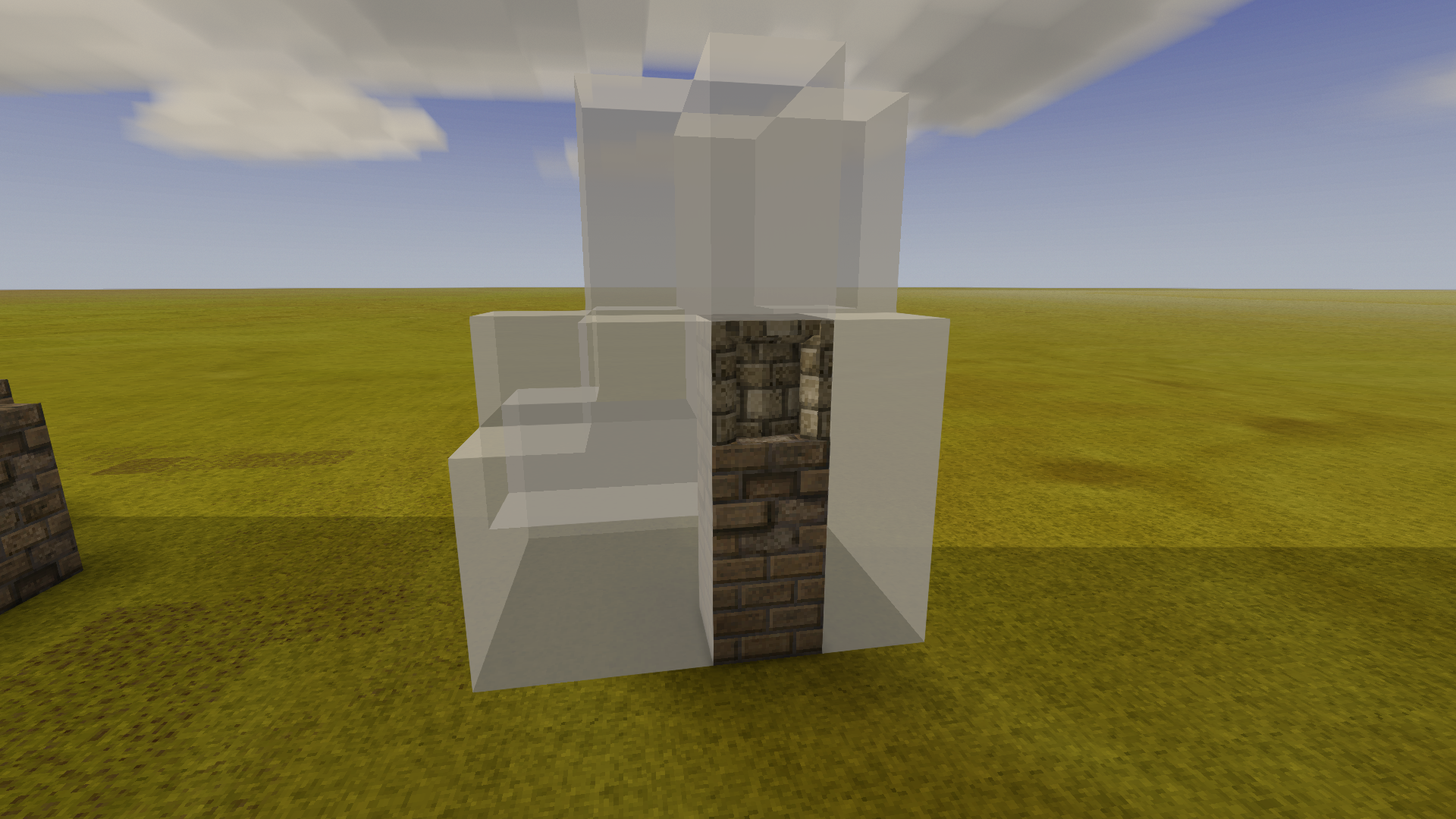
Section titled “How the structure works”The door is the anchor block. Sneak-right-click it to show the current tier’s projection. Sneak-right-click again to cycle through tiers. Build the pattern exactly as projected, including the empty spaces, fuel spaces, pots, and—at tier 3—the grate layer.
The lowest temperature among the fuel positions becomes the furnace process temperature, so one cool fuel stack can hold back the entire charge. The furnace then heats, holds for eight hours, and cools. Remove fuel during cooling and let the structure cool slowly.
Tiers and block positions
Section titled “Tiers and block positions”The counts below are the projected positions in the IME 1.0.16 patterns. They are useful for gathering materials, but they are not a replacement for the in-game projection.
| Tier | Valid furnace brick family | Brick needed | Smelt pots | Fuel positions | Ramp / hold / cool |
|---|---|---|---|---|---|
| 1 | Mudbrick, clay brick including fire brick, or refractory brick | 37 | 1 | 1 | 1 h / 8 h / 1 h |
| 2 | Clay brick or refractory brick | 85 | 4 | 2 | 2 h / 8 h / 2 h |
| 3 | Fire-clay brick or refractory brick | 129 | 9 | 3 | 4 h / 8 h / 4 h |
On this server, the tier-1 mudbrick route is the intended first furnace. The installed compatibility patch may also accept supported decorative or glazed variants at the tiers where the projection recognizes them. If a variant does not validate, replace it with the material family shown above.
Practical layouts
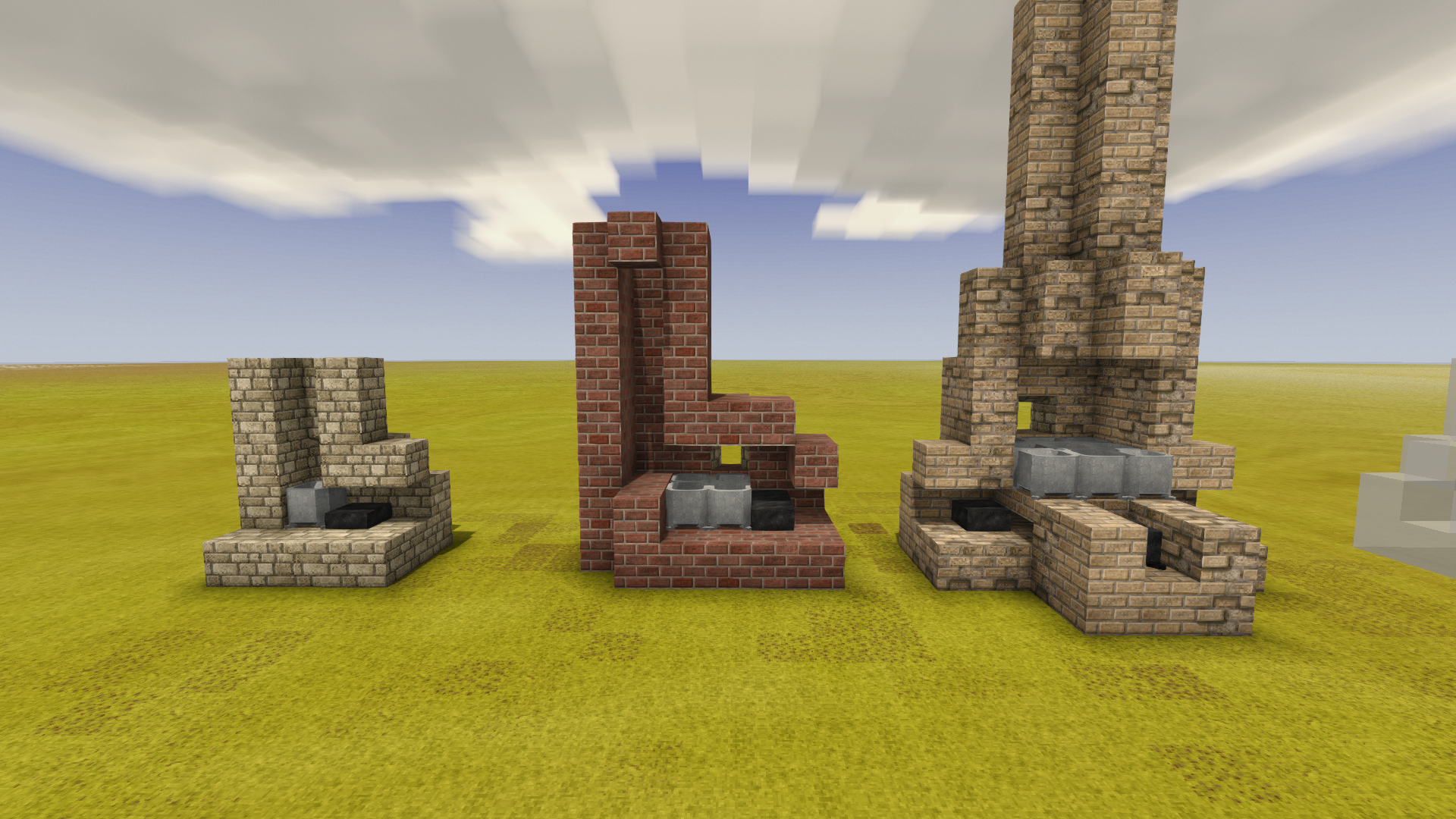
Section titled “Practical layouts”- Tier 1: The compact entry furnace has one pot directly under the door and one fuel position beside the pot. It is the recommended first copper and tin furnace.
- Tier 2: The four pots form a 2x2 group behind and below the door, with two fuel positions alongside the pot area.
- Tier 3: The nine pots form a 3x3 group on top of nine grates. Three fuel positions feed the larger chamber.
The picture show the different tier of the furnace in a cutout version to see the inside.
Preparing the charge
Section titled “Preparing the charge”Use concentrated ore muck whenever possible. Stone muck is deleted during the smelt and only occupies pot space. Fill the pot with ore muck, then add flux. For full flux efficiency, plan one flux item per four muck layers, rounding up; using less flux means the full additive benefit is not applied.
A full Smelt Pot stores up to 32 muck layers. The Small Smelt Pot stores up to 16 layers and has a more limited additive/flux capacity. The full pot is made from fire clay; the small pot uses the red or blue clay recipe. Both are placed in the projected pot positions.
Fluxes
Section titled “Fluxes”The reference flux bonuses are availability improvements:
| Flux or additive | Availability bonus |
|---|---|
| Powdered borax | +10% |
| Lime | +10% |
| Crushed quartz | +10% |
| Powdered charcoal | +8% |
| Potash | +6% |
| Charcoal piece | +5% |
| Powdered flint | +3% |
| Powdered iron oxide | +3% |
Flux is not a substitute for concentration. It improves how much of the metal already represented in the charge is available at the end of the smelt. Keep the strongest fluxes for valuable or low-availability charges when supplies are limited.
Fuel and temperature
Section titled “Fuel and temperature”The target ore determines the minimum useful fuel temperature. The furnace uses the lowest temperature in its fuel positions, so fill every position with fuel that is hot enough for the target metal. For example, zinc can be refined with a lower-temperature fuel than copper; copper needs coal or better in the reference setup.
Do not add fuel during the cooling stage. Let the furnace complete its heat, hold, and cool sequence, then open the pots.
Pig Metal and the final ingot
Section titled “Pig Metal and the final ingot”When the smelt completes, the furnace outputs a variant of Pig Metal, not a normal vanilla ingot. Pig Metal is a single metal item that can be melted in a crucible at the target metal’s normal melting point.
When processing the pig metal you will often ahve leftover metal in the crucible. You can just spill the crucible in a wooden barrel with water to create metal prills that can be reused later